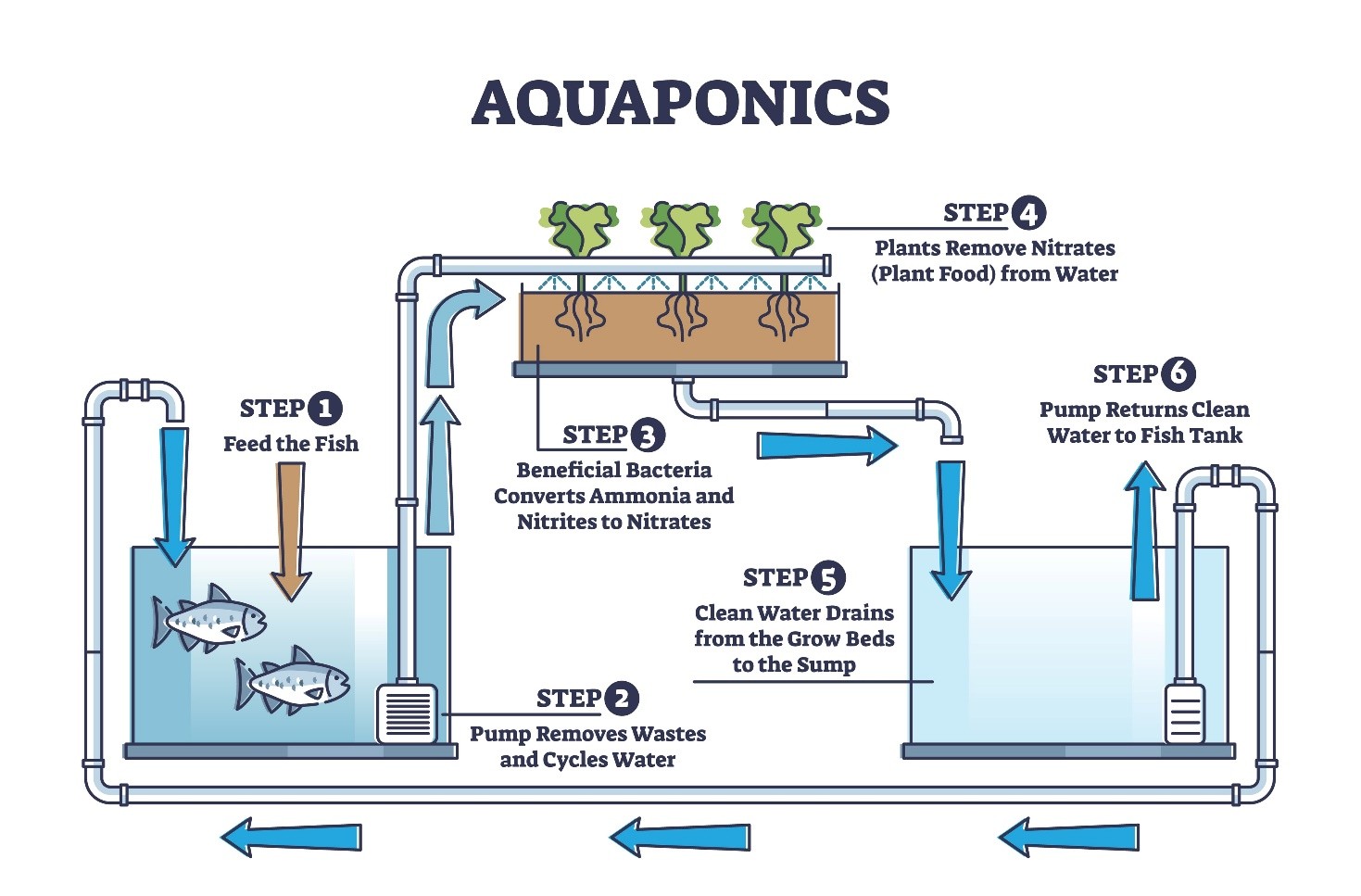
Aquaponics (a system combining hydroponics and aquaculture) is a symbol of circular agriculture in the context of urbanization. In this system, fish waste becomes a valuable nutrient source for plants, while water is naturally filtered by plant roots and recirculated back to the fish tank. This process helps save up to 90% of water compared to conventional soil-based cultivation and completely eliminates the need for chemical fertilizers. From a scientific perspective, controlling environmental parameters (pH, NH₃, DO) is a decisive factor for system efficiency. With the support of IoT sensors, this model can be fully automated, significantly increasing productivity while reducing labor requirements. Aquaponics not only addresses the issue of clean food supply in densely populated urban areas but also serves as an adaptive solution to limited arable land.
The aquaponics model also helps reduce dependence on long-distance food supply chains, thereby lowering the carbon footprint associated with transportation. In addition, the presence of such systems in urban spaces creates green, refreshing environments that contribute to improving the urban microclimate. The application of aquaponics is not merely a food production solution but also a way to reconnect people with nature within modern living spaces. This represents a modern management approach, demonstrating that agriculture can become an integral part of urban architecture, contributing to the development of smart and sustainable cities. Investment in circular urban models generates synergistic benefits in terms of environmental quality, public health, and mental well-being, while providing safe, locally produced food for urban communities (Lia et al., 2018).
Authors: Hao Phu Dong, Binh Thanh Nguyen*
References:
Lia, C., Leeb, C. T., Gaoa, Y., Hashimb, H., Zhangc, X., Wud, W.-M., & Zhanga, Z. (2018). Prospect of aquaponics for the sustainable development of food production in urban. CHEMICAL ENGINEERING, 63.


ⓒ 2026 BICE | Biochar-based Integrated Circular Economy for Paddy Rice.

