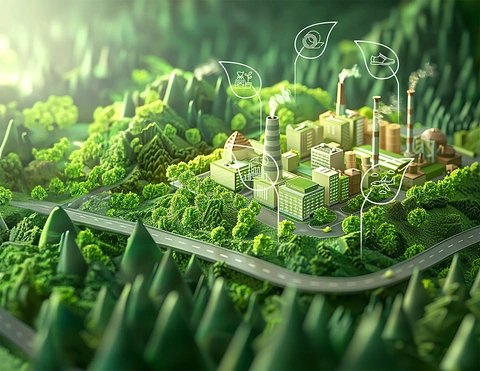
Forestry and agriculture are emerging as important sources of carbon credits due to their natural capacity to absorb and store carbon. Through projects such as sustainable forest management, afforestation, and ecosystem restoration, the amount of CO₂ sequestered in biomass and soils can be converted into tradable carbon credits. These projects not only contribute to carbon neutrality goals but also generate co-benefits, including biodiversity conservation, water resource protection, and sustainable livelihoods for local communities. Standardizing methodologies for measuring carbon sequestration in agricultural soils remains a significant technical challenge, yet it presents promising opportunities for farmers to access new sources of green finance.
However, the implementation of nature-based carbon credit projects requires strict adherence to sustainability and additionality criteria. Risks such as forest fires, pest outbreaks, or land-use changes can result in the loss of stored carbon, leading to substantial discrepancies in carbon accounting. Therefore, monitoring systems based on remote sensing and artificial intelligence are increasingly being applied to track forest conditions in real time with high accuracy. Establishing rigorous international standards for agricultural and forestry carbon credits is essential to ensure a high-quality supply of credits, thereby attracting multinational corporations and investors to nature-based solutions (Hurteau, 2021).
Authors: Hao Phu Dong, Binh Thanh Nguyen*
References:
Hurteau, M. D. (2021). The role of forests in the carbon cycle and in climate change. In Climate change (pp. 561-579). Elsevier.


ⓒ 2026 BICE | Biochar-based Integrated Circular Economy for Paddy Rice.

