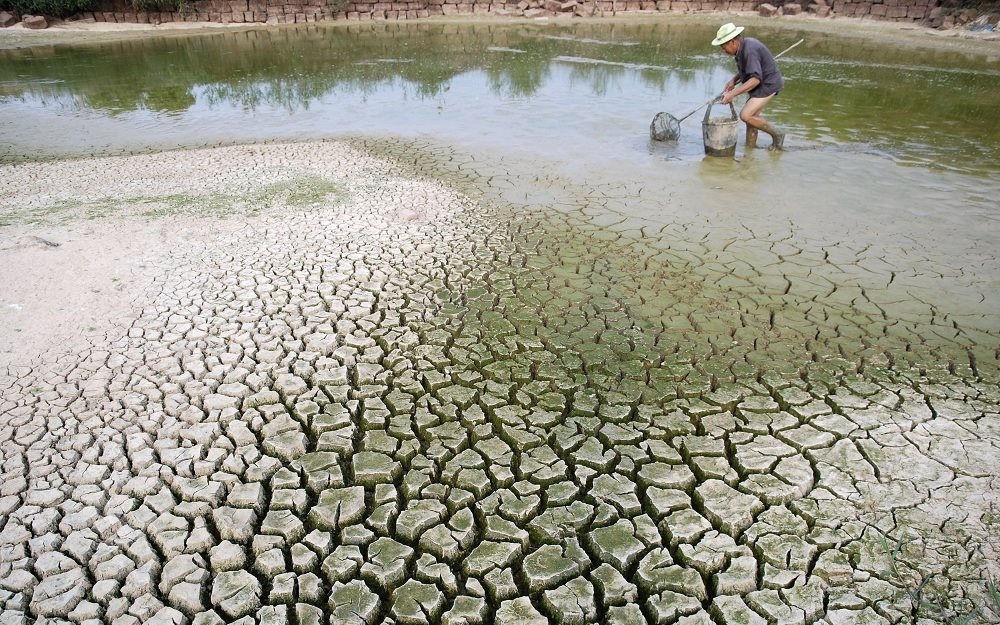
Restoring degraded land is a top priority to ensure food security and respond to global climate change. Rather than relying on localized interventions, a spatial approach helps prioritize actions based on the degree of degradation and the actual restoration potential of each land parcel. The use of multi-temporal satellite imagery combined with vegetation indices enables continuous monitoring of the recovery process in areas affected by overexploitation or chemical pollution. Spatial analysis has become a key skill for resource management in the digital era. Studies confirm that integrating community participation into land restoration management leads to more sustainable outcomes compared to top-down interventions. Land restoration not only restores productive value but also recovers environmental functions such as water retention, climate regulation, and carbon storage.
Furthermore, restoring degraded land is a long-term process that requires consistent monitoring and persistence. With modern remote sensing tools, managers can assess the effectiveness of restoration projects without relying heavily on labor-intensive field measurements. Restoration efforts go beyond improving soil quality; they also create new livelihood opportunities for communities through adaptive agricultural models. This represents a governance approach that combines scientific and technological innovation with social responsibility, laying the groundwork for achieving the United Nations’ sustainable development goals related to environmental sustainability. Protecting and restoring degraded land contributes to slowing global warming, preserving biodiversity, and safeguarding vital natural resources for future generations, thereby ensuring the long-term stability of human development on the planet (Nkonya et al., 2015).
Authors: Hao Phu Dong, Binh Thanh Nguyen*
References:
Nkonya, E., Mirzabaev, A., & von Braun, J. (2015). Economics of land degradation and improvement: an introduction and overview. In Economics of land degradation and improvement–a global assessment for sustainable development (pp. 1-14). Springer.


ⓒ 2026 BICE | Biochar-based Integrated Circular Economy for Paddy Rice.

