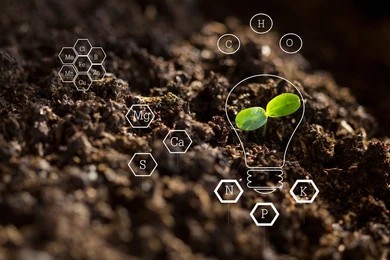
The application of the Internet of Things (IoT) has created a significant transformation in soil environmental monitoring, shifting from periodic manual sampling methods to real-time monitoring systems with high frequency. This technology enables the continuous collection of soil physicochemical parameters such as moisture, pH, heavy metal concentrations, and nutrient residues directly from the field. In terms of data frequency, wireless sensor networks maintain continuous data transmission cycles at intervals of every 15 minutes, increasing temporal resolution by thousands of times compared to conventional sampling and laboratory analysis methods. This improvement allows researchers to observe even the smallest fluctuations in soil properties in response to extreme weather events (Tzounis et al., 2017).
In terms of economic efficiency, the deployment of IoT infrastructure can reduce operational costs by approximately 60% for large-scale environmental monitoring networks due to its ability to automate data transmission and processing. The reliability of IoT systems lies in their capability to detect variations in heavy metals and nutrient levels with a technical error margin of only ±2%. This provides a solid foundation for precision agriculture and the sustainable protection of soil ecosystems under increasing chemical pollution pressure. IoT-generated data also serves as critical inputs for big data platforms, supporting the training of long-term soil health prediction algorithms. The widespread adoption of IoT technology is a necessary step toward transitioning to high-tech agricultural systems, enabling authorities to issue early warnings of chemical spills or soil degradation, thereby protecting public health and maintaining the stability of agricultural ecosystems under growing production pressures (Mohyuddin et al., 2024).
Authors: Hao Phu Dong, Binh Thanh Nguyen*
References:
Mohyuddin, G., Khan, M. A., Haseeb, A., Mahpara, S., Waseem, M., & Saleh, A. M. (2024). Evaluation of machine learning approaches for precision farming in smart agriculture system: a comprehensive review. IEEE access, 12, 60155-60184.
Tzounis, A., Katsoulas, N., Bartzanas, T., & Kittas, C. (2017). Internet of Things in agriculture, recent advances and future challenges. Biosystems engineering, 164, 31-48.


ⓒ 2026 BICE | Biochar-based Integrated Circular Economy for Paddy Rice.

