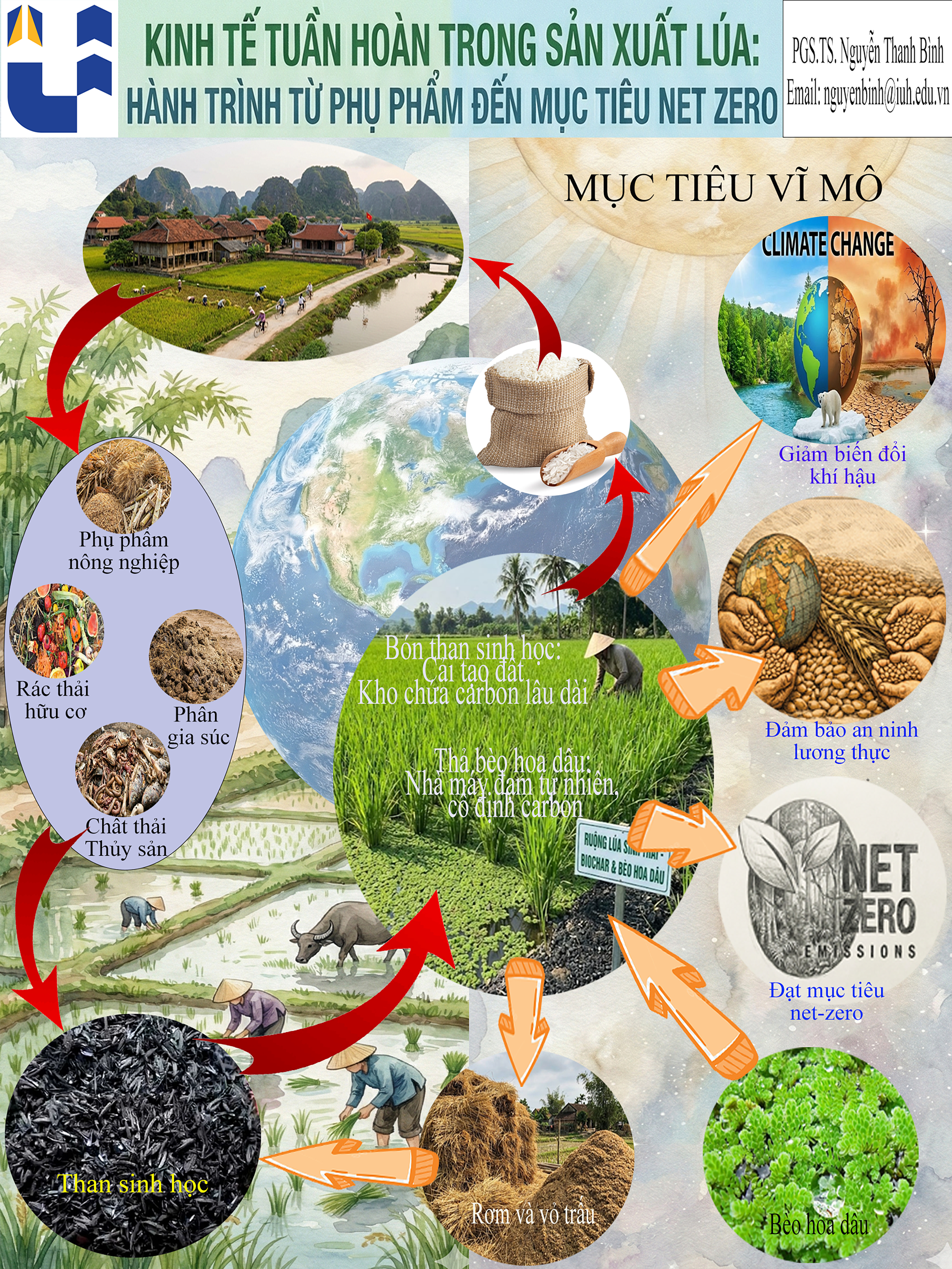
This project aims to pioneer the achievement of net-zero emissions in rice production through the development of a bio-circular economy (BCE) model for the Mekong Delta (MD). This is an urgent solution to address climate change, enhance resource use efficiency, ensure food security, and promote sustainable agriculture. The main objective is to establish an optimized BCE model that integrates biological factors such as biochar and Azolla in lowland rice cultivation, suitable for key ecological zones in the MD. The project comprises five main components: (1) comprehensive ecological zoning of the MD; (2) analysis of synergistic mechanisms between biochar and Azolla in reducing greenhouse gas emissions and carbon sequestration, using advanced techniques such as stable isotopes (δ13C, δ15N) and microbial DNA analysis; (3) determination of optimal biochar dosage; (4) evaluation of economic-environmental efficiency; and (5) modeling long-term impact predictions under climate change scenarios. Expected outcomes include 5 publications in prestigious international journals, 2 other international publications, 4 domestic publications, and training of 2 PhD candidates and 2 Master's students. With high scientific and practical significance, the project is expected to make substantial contributions to green agricultural development strategies, emission reduction, and the realization of Vietnam's net-zero commitment.


ⓒ 2026 BICE | Biochar-based Integrated Circular Economy for Paddy Rice.

